What Is a Good Army SIFT Score? 40 vs 55
The Army SIFT is scored 20 to 80 with 40 to qualify, but recruiting lists 55 and above as Most Preferred. What the scale means and why a pass is final.
A SIFT score of 40 gets you through the door to Army flight training. It does not get you selected. Army recruiting lists 55 and above as the score it most prefers, and because a pass can never be retaken, the score you walk out with is the one every board will see. Here is what the numbers mean and how to aim for the right one.
What the 20 to 80 scale means
The SIFT reports one score from 20 to 80. The scale has a mean of 50 and a standard deviation of 10. So 50 is the average examinee, 40 is one standard deviation below average, and 55 is half a standard deviation above it. A score is not a percentage of questions right, and there is no published table that turns marks on the subtests into a SIFT score.
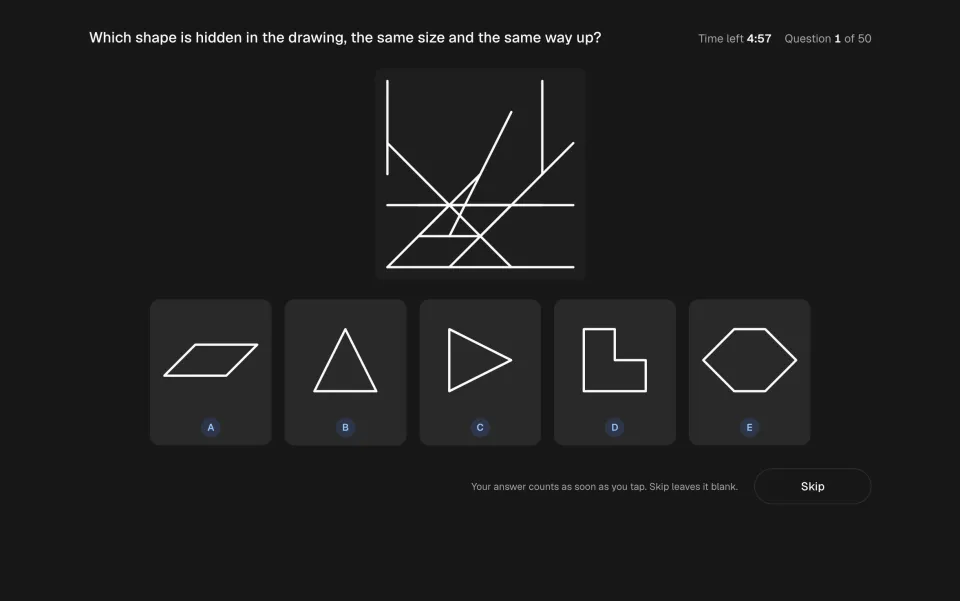
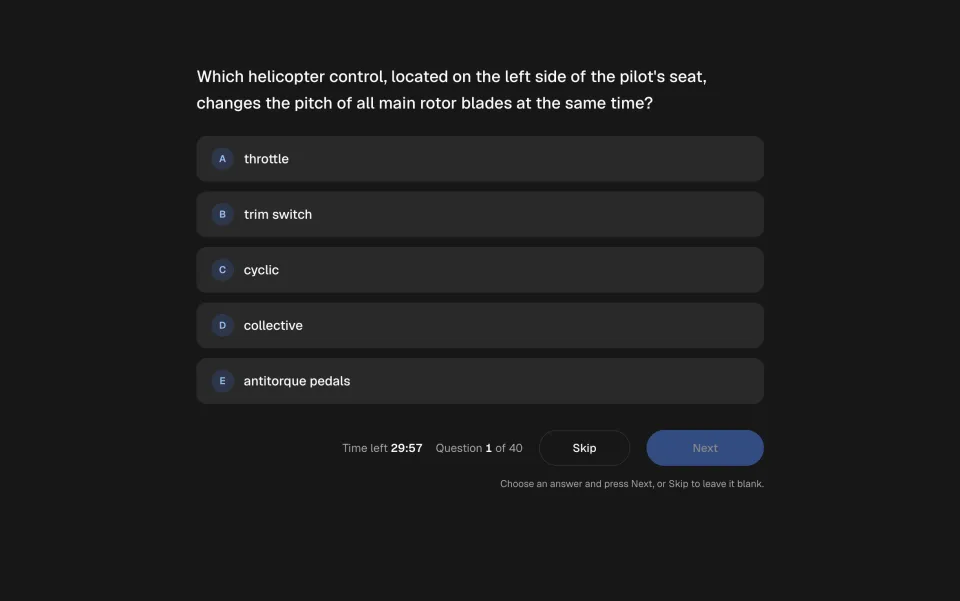
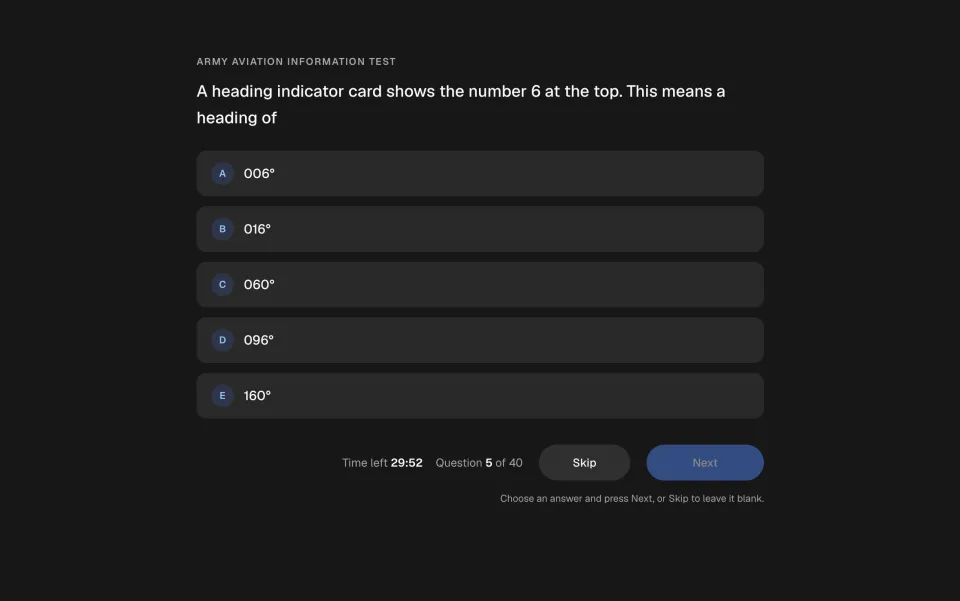
All seven subtests feed it: Simple Drawings, Hidden Figures, the Army Aviation Information Test, the Spatial Apperception Test, Reading Comprehension, Math Skills and Mechanical Comprehension. The Army does not release the formula, but says it is compensatory, meaning a poor result on one subtest can often be offset by a strong result on another. No subtest has a minimum of its own.
40 qualifies you
40 is the minimum to qualify for Army aviation, and Army recruiting marks it as not waivable. The Army notes the minimum may change as the test is validated, so check with your recruiter or unit before you sit. Below 40, you cannot request the Class 1 flight physical or go before a selection board.
55 is what competitive applicants score
Army recruiting’s page for warrant officer rotary wing aviators sets out two columns: Minimum, where the SIFT is 40, and Most Preferred, where it is 55 and above. It adds that selected applicants exceed the minimums and have historically aligned with the Most Preferred column. A Fort Benning guide for officer candidates branching aviation puts it more plainly: 55 is currently about average for accepted candidates.
So a 45 passes, but it puts you below most of the people you are competing with. The board weighs your SIFT alongside your academics, any aviation experience and your potential as an officer or warrant officer, so a strong score is one of the few parts of the packet you can raise by working at it.
Why a pass changes your strategy
Most tests let a disappointing score be improved on a retake. The SIFT does not. Once you reach 40, you cannot retest, so a 42 stays a 42 for the rest of your application. Only a fail allows a retest: one more attempt, no sooner than the 46th day after the first, approved by your immediate commander if you are serving. A second fail ends your eligibility for Army aviation. Many guides still quote a wait of 180 or 181 days; that was an older rule, replaced in the 2022 pamphlet.
That makes the timing of your one real sitting the most important decision. Book it when your practice scores are steadily above 55, not when they first touch 40.
How to raise your score before you sit
- Study for Aviation Information. The Army says your score on it can be improved by study. Helicopter controls, rotor aerodynamics, instruments and flight rules are all in the FAA’s free handbooks.
- Do not guess blindly on the speed tests. Simple Drawings and Hidden Figures take off part of a right answer for every wrong one. Answer what you can see and skip the rest.
- Never leave a blank on the fixed tests. Aviation Information, Spatial Apperception and Reading count a blank as wrong and charge nothing extra for a wrong answer.
- Keep a steady pace on the adaptive tests. Math Skills and Mechanical Comprehension take a penalty for questions left unreached, and the Army says random guessing near the end usually costs more.
- Practise maths by hand. There is no calculator, only a few formulas on screen.
Practise against the same lines
Our Army SIFT practice gives every subtest a score on the 20 to 80 scale, marked against 40 and 55. Start with the guides to SIFT Hidden Figures and the Army Aviation Information Test, then sit the full SIFT practice test for an estimated SIFT score and the two parts holding it down. Because the Army’s formula is not published, our estimate weights the seven subtests equally, so treat it as a guide to where you stand rather than a prediction to the point.