NPOST or PELLETB: Which POST Test Is Yours?
"POST test" names two police exams: Stanard's NPOST and California's PELLETB. How they differ, how to tell which one you face, and how to prepare.
A police job posting that asks you to pass "the POST test" can mean two different exams with different sections, different scoring and different preparation. Getting it wrong costs you weeks of practice on the wrong material. Here is how to tell which one is yours.
Two tests share one name
POST is the usual short name for a state's Peace Officer Standards and Training body, and California's commission sets its own written test, the PELLETB. Agencies in California, the California Highway Patrol among them, call that "the POST test".
Outside California, the same three letters often mean something else: the National Police Officer Selection Test from Stanard & Associates, a private firm that sells it to police departments and sheriff's offices. Its own materials call it the POST too. Prep sites add an N, NPOST, to tell it apart, but agency pages rarely do. The La Crosse Police Departmentin Wisconsin, for example, calls its written exam "the National Police Officer Selection Test (POST)".
Side by side
How to tell which one you are sitting
Start with where the agency is. In California the POST test is the PELLETB, though some departments, the LAPD among them, run their own written test and accept a PELLETB score in its place. Iowa is the clearest case the other way: the state's academy rules name Stanard's test for every new officer, with at least 70 percent needed on each of its four sections. Our Iowa guide covers the retake rules.
Then read the posting or the study material the agency links to:
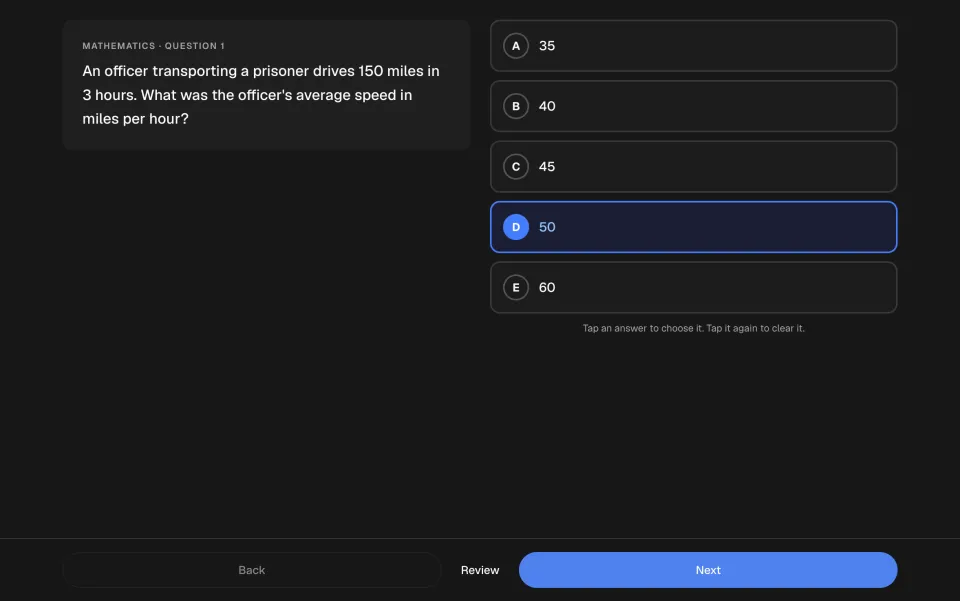
- It is the NPOSTif you see Stanard & Associates, ApplyToServe, a maths or arithmetic section, incident report writing, or a percentage pass mark per section.
- It is the PELLETB if you see California POST, clarity, vocabulary, a T-score (often 42), Assess.ai, or a rule that you can sit it only once every 30 days.
If the posting says neither, ask the recruiting office which publisher the test is from.
What changes in how you prepare
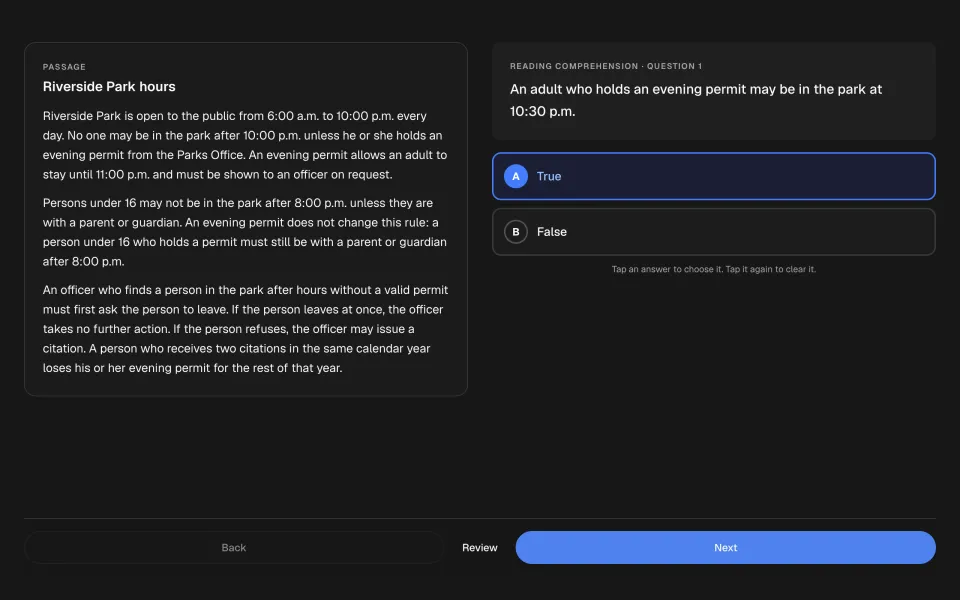
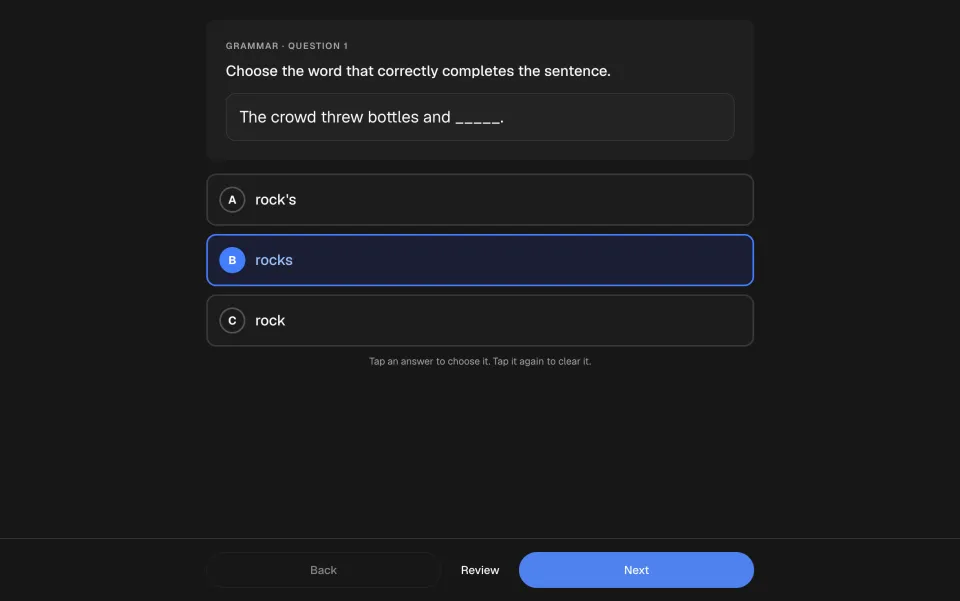
The overlap is real but smaller than the shared name suggests. Both test reading, vocabulary and spelling in a police setting, neither needs any knowledge of police work, and neither takes marks off for a wrong answer, so you should never leave a blank.
The NPOST adds two things the PELLETB does not have. Its mathematics section is arithmetic word problems done by hand, so long division and percentages need to be quick on paper. And its report writing means your spelling has to be right when you produce it, not just when you pick it from four options. Because the NPOST scores each section on its own, and Iowa asks for 70 percent on every one, a weak section cannot hide behind a strong one.
The PELLETB instead leans on vocabulary and on choosing the more clearly written of two sentences, and its reading score probably counts for more of the total than any single writing sub-test.
Practise the right one
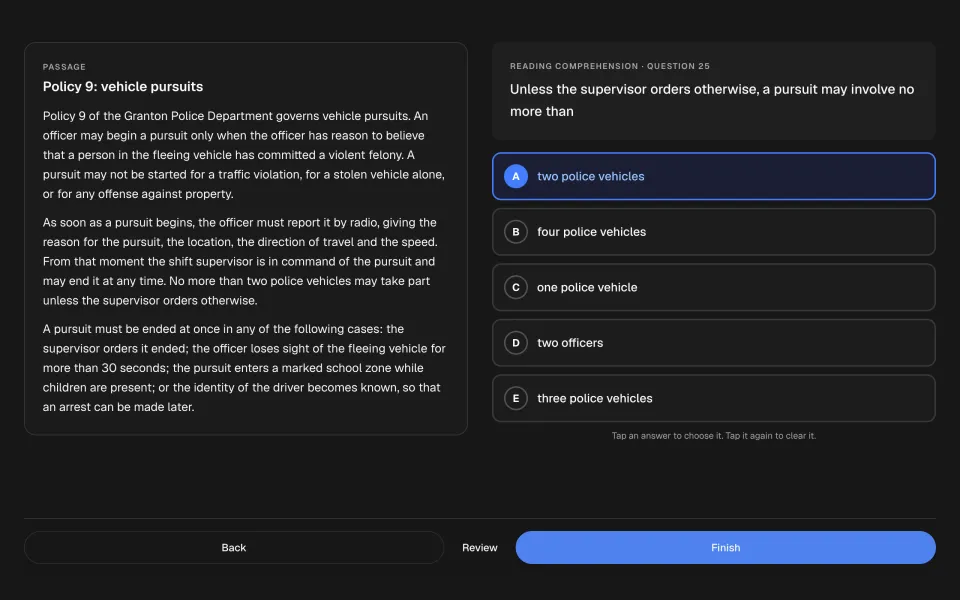
Our NPOST practice testsrun the mathematics, reading comprehension and grammar sections on their real clocks, one at a time or back to back, and the provider page explains how report writing is marked. Mathematics is free to start. If your test is California's, the PELLETB practice page covers all four sub-tests and PELLETB in 2026 explains what changed recently.