IBEW Aptitude Test Score: Qualifying, the Interview and Retakes
The IBEW aptitude test tells you only whether you qualified. Who sets the bar, why the interview decides your rank, how long the list lasts and when to retake.
Most people who sit the IBEW aptitude test want to know one thing afterwards: what did I score? You will not be told. The result is a single word, qualified or not, and even a qualifying result is only a ticket to the stage that decides your place. Here is how the result works, who sets the bar, and what to do if you miss it.
You learn whether you qualified, not your score
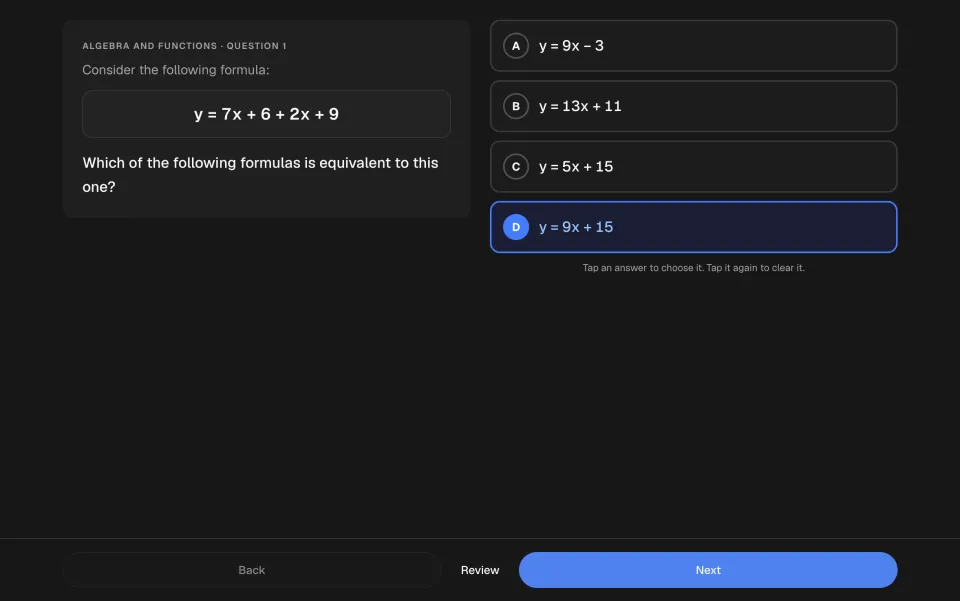
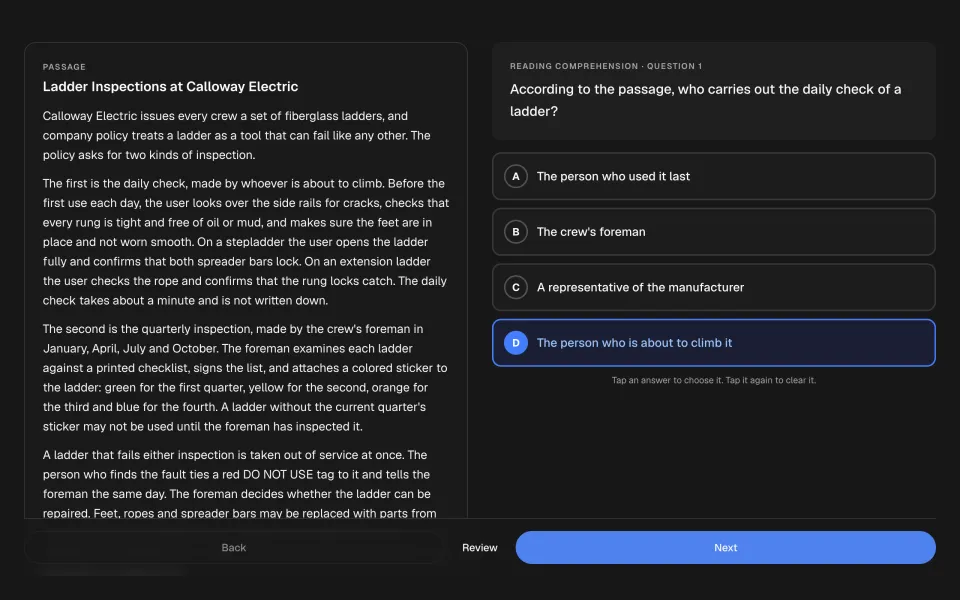
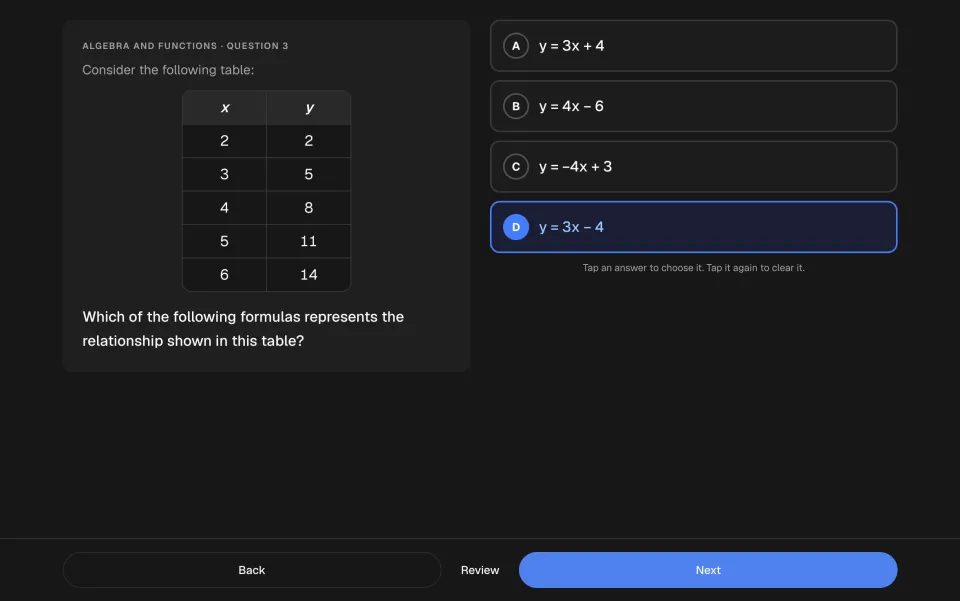
The test is two papers sat on the same day: Algebra and Functions, 33 questions in 46 minutes, and Reading Comprehension, 36 questions in 51 minutes. Your score on each is simply the number you get right, with nothing taken off for a wrong answer. The results go to your JATC about two to four weeks later, and the ALLIANCE is plain about what reaches you: "Exact scores are not provided." You hear whether your score qualified you for the next step, and that is all.
That has a practical upside. There is no number to agonise over and no point comparing notes with other applicants. Either you are through to the interview or you are planning a retake.
Each JATC sets its own qualifying score
There is no single national pass mark. Each local JATC decides what qualifies for its programme, which is why figures quoted online disagree with each other: they come from different committees, different years or guesswork. If you want to know your local bar, ask the JATC you are applying to. Some will tell you; many will not.
Local rules can also change who needs a qualifying score at all. The Cincinnati Electrical Training Center, for example, still has applicants with 2,000 or more hours of electrical work sit the test, but sets no minimum score for them.
The interview decides your rank
A qualifying result buys an oral interview with a committee of NECA and IBEW members. After it, applicants are ranked on the interview and their qualifications, and the ranking becomes an eligibility list that lasts two years. As openings come up, the JATC works down the list.
This matters because the ALLIANCE notes that applicants often outnumber openings four, five, six or more times. Qualifying on the test does not mean a place; your interview and what you bring to it do. At NIETC in Portland, for example, the interview is ten minutes in front of a panel, and an applicant can ask for a second interview after 180 days if they have added trade work or trade classes since.
Treat it like any structured interview: have short, specific examples ready of times you worked hard, learned a practical skill, turned up reliably and worked safely. Our guide to behavioural interview questions shows how to shape them.
If you do not qualify: the retake wait
The wait before you can sit the test again is three to six months, so ask your JATC which applies to you. The rule is enforced: a test taken before the wait is up is invalid, and the ALLIANCE warns that wilful attempts to break it may lead to permanent disqualification.
Two smaller rules catch people out. Leaving part way through does not let you finish another day: an unfinished test is scored on what you answered. And if you need an adjustment for a disability, it has to be requested before the test, with documentation, not raised afterwards to explain a result.
Using the wait well
Three months is plenty of time to move a result. The algebra paper is formula work, sequences, tables and word problems done by hand, with no calculator allowed, so the quickest gain usually comes from fractions, negative numbers and rearranging equations without one. The reading paper rewards a routine: read the question first, find the line that answers it, and check each option against the passage rather than against what sounds right.
Our IBEW aptitude test practice runs both papers on their real clocks, and the Algebra and Functions guide walks through the question types. For the wider picture on resits, see can you retake an assessment test.